
.svg)
.avif)
%20(1).avif)
%20(1).avif)
.avif)



The holidays bring late nights, packed calendars, and a lot of food you didn’t choose. If you live with an autoimmune condition, that mix can leave you with headaches, joint pain, or a full flare just as the new year starts.
You don’t have to sit the season out. A little planning goes a long way. Here’s how to protect your energy and still enjoy the parts that matter to you.
1. Plan before the rush
- Choose 3–5 things that matter most. A movie night, one family dinner, baking with your kids. Put those first and let the rest be optional.
- Protect the days before big events. Map out your schedule ahead of time so you aren’t cramming errands, cooking, and wrapping into one day. If you can, take a few days off or cut back your hours.
- Schedule rest like an appointment. A midday nap on the holiday itself counts.
2. Lighten your load
- Divide and conquer. Hand out dishes to family members instead of cooking everything yourself. Keep the dishes you make for yourself, so you know there’s something you can eat.
- Batch one treat you love. Make a big batch of a dessert that works for you and freeze it in portions. You’ll have something to bring to every gathering without baking again.
- Give yourself permission to sleep in. If guests are staying over, tell them the night before that you’ll be up late in the morning.
3. Know your warning signs
Stress can build up quietly, so learn to spot it early.
- Write down your top 3 warning signs. A short fuse, achy joints, a headache that won’t quit, or feeling wired but tired. Once you know what to look for, you can act sooner.
- Check in on your emotions as well as your body. If you feel overwhelmed, irritable, or sad, take a few slow breaths and ask yourself: What do I need right now? Don’t push it aside because “it’s the holidays.”
- Keep a short list of quick resets for when those signs show up:
- A 10-minute walk outside
- A mug of warm broth or tea
- A big glass of water (dehydration makes cravings and fatigue worse)
- Five slow, deep breaths
- A few quiet minutes alone in another room
- Step away without guilt. Time to recharge isn’t time taken from your loved ones. It’s what lets you enjoy being with them.
4. Make food the easy part
Food is often the biggest source of holiday stress. A few small habits help a lot.
- Talk to the host ahead of time. Ask what’s on the menu, share what you avoid, or offer to cook part of the meal.
- Bring your own dish, even as a guest, even if it’s just for you.
- Start the day with a satisfying breakfast and keep low-inflammation snacks with you, so you aren’t running on empty.
- Know your “hard no” foods and your “worth it” foods. Decide ahead of time which triggers you’ll skip no matter what, and which occasional treats are worth it to you.
- Use simple, confident phrases. Try “I’m choosing this instead” rather than “I can’t eat that.” A friendly “No, thank you” works too. You don’t owe anyone an explanation, and their opinions don’t live in your body.
5. If you slip, reset and move on
The holidays are one moment in a long year. If you overdo it, drink some water, rest, and get back to your routine at the next meal. Guilt isn’t required.
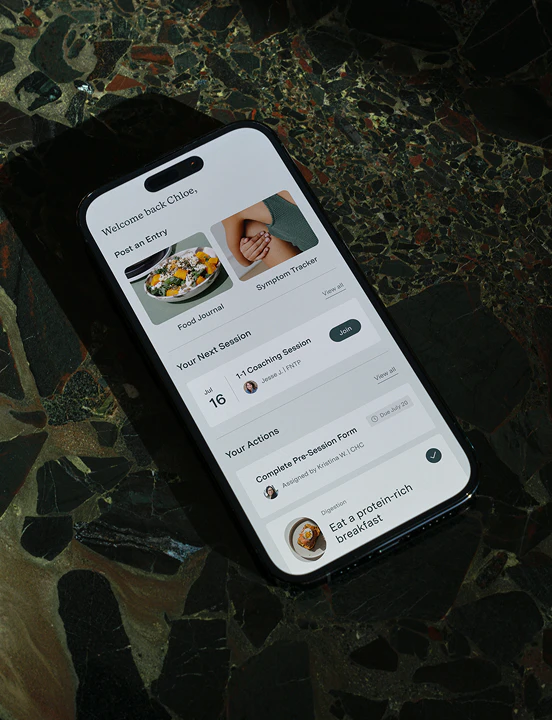
One-on-one care from a registered dietitian who specializes in inflammation, free through many employer and health plans.
Your 5-minute holiday plan
Before the season gets going, jot down your answers:
- 3 things I won’t compromise on to protect my health (e.g., skipping gluten)
- 3 things I’ll enjoy without guilt (e.g., a nap on the holiday itself)
- 3 warning signs that tell me to slow down (e.g., snapping at family)
- 3 quick resets I’ll use when I notice them (e.g., 10 minutes of quiet)
Keep your list on your phone or on the fridge. After the holidays, look back at what worked and what you’d change. You can use the same plan for birthdays, trips, and other big events all year.


